


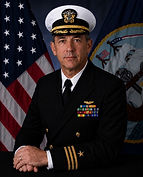
CDR. R. Newton


CWO-2 F. Newton
Vietnam this month is a two part'er.
1. The 39th Signal Battalions 2nd Aviation Branch
2. Harrison Fords U6 Beaver when it was in the Army, and the young Warrant Officer that flew it for 2 years


Fords Beaver under restoration by Kenmore at SkyHabor in Washington State.
An article about Harrison Ford’s de Havilland Beaver in the January 1999 issue of Western Flyer struck a chord with reader Frank Newton, then Quality Manager for U.S. Propeller in Stockton, California.
The article, written by John Gowey, primarily described Kenmore Air Harbor’s restoration of Ford’s Beaver and briefly mentioned that the aircraft had once served with the U.S. Army. As it turned out, Newton had flown that very aircraft during the Vietnam War. He went through his personal records and logbooks and compiled a remarkable history of the airplane’s military service.
According to Newton’s records, Chief Warrant Officer Newton became intimately familiar with Ford’s aircraft: a de Havilland DHC-2 Beaver Mk. II, serial number 855, carrying U.S. Army serial number 54-1709. During its Army service, the aircraft was known by the tactical call sign “Wolfhound 709.”
Newton’s first encounter with the aircraft came in Saigon, Republic of South Vietnam, in November 1964.
“I signed a hand receipt for the plane, releasing it from the custody of Lt. Wayne Sorenson, who was going home at the end of his tour,” Newton recalled. “It was one of four U-6As assigned to the 39th Signal Battalion Aviation Section.”
Newton believed the Beaver had arrived in Vietnam before the arrival of American combat troops—at least officially. To his knowledge, it was one of only 15 or 16 Army Beavers that served in Vietnam during the conflict, and at least two of those aircraft were ultimately destroyed.
A Workhorse in Vietnam
From November 1964 until November 1966, CWO-2 Newton logged approximately 2,200 hours in 54-1709. He flew the aircraft throughout South Vietnam, from Dong Ha in the north to Ca Mau in the south. He landed it at locations ranging from Cam Ranh Bay to inside the ancient walled city of Hue.
The Beaver worked hard, day and night, in good weather and bad. It transported personnel, equipment, supplies, wounded soldiers, the dead, civilians—and, on one memorable occasion, a planeload of French-speaking nuns.
“That flight was something else,” Newton recalled. “It was so turbulent and raining so hard that water leaked in through the overhead windows and around the radio control heads. Those nuns gave their rosary beads a real workout.”
The aircraft endured plenty during its years in Vietnam, and the restoration performed by Kenmore Air Harbor was only the latest in a long series of major repairs.
Battle Damage and Accidents
At one point, the Beaver suffered a serious mishap when Capt. Billy Joe Patterson landed it at Tu Dau Mot, north of Saigon, after the airstrip had been closed.
“Old 54-1709 suffered the indignity of being dumped on its back in the mud,” Newton recalled.
During the subsequent repairs, the aircraft’s original glossy gray paint and large U.S. star insignias were replaced with a flat olive-drab finish.
The Beaver also suffered combat damage. A wing was replaced after the aircraft received ground fire while flying from Ca Mau. Another repair became necessary after an unfortunate ground accident at Qui Nhon.
“The load hinge brackets were replaced after a GI drove a three-quarter-ton truck into the wing while it was at Qui Nhon,” Newton said.
Despite the accidents and battle damage, 54-1709 continued to perform its mission.
An Unusual Air Drop
The Beaver even had the distinction of making the only air drop performed by a UC-6A during the entire Vietnam War.
“Unable to land, we made the air drop to resupply a Special Forces signal site on Lang Bien Mountain near Dalat,” Newton recalled. She also has the distinction of making several “hard rice” drops to entrenched combat troops who may have been over the border into Laos and Cambodia. We even picked up a downed helicopter and returned it to the RVN by fastening it to the sides of the Beaver with tie down straps.
For a small utility aircraft primarily designed for short takeoffs and landings, the Beaver’s ability to operate in remote and difficult locations made it an invaluable workhorse.
Newton’s last sight of the battle-scarred aircraft came at a base in Vung Tau as he prepared to return home.
A Reunion With the Beaver’s New Owner
Years later, after compiling everything he knew about 54-1709’s Vietnam service, Newton decided to send the information to Harrison Ford.
Ford responded, and the two men eventually had a lengthy conversation about the aircraft.
Newton explained to Ford what the Beaver had meant to him after carrying him through two years of combat flying.
“All the time I flew her, she never made me wonder if I was going to reach my destination,” Newton told Ford. “I’d ask you to take care of her, but I’m sure you will, just as she will take care of you.”
Ford gave Newton a standing invitation to visit his old aircraft in Jackson Hole, Wyoming, where Ford kept the Beaver.
Sadly, Newton passed away before he could make that journey.
Another Connection to Harrison Ford The Beaver was not Newton’s only connection to Harrison Ford.
In the 1973 film American Graffiti, the young Ford played Bob Falfa, a hot-rod-driving high school dropout. Near the end of the movie, there is a scene involving a DC-7 departing with one of the film’s characters.
The scene was filmed in the mid-1970s at Stockton Airport, where Newton worked.
“My brother Randall tells me that if you look closely,” Newton said, “you can see the truck I owned at the time in that scene.”
From a muddy airstrip outside Saigon to a restored Beaver in the hands of one of Hollywood’s most famous actors, the story of 54-1709 is an extraordinary link between aviation history, the Vietnam War and Hollywood.
For Frank Newton, however, the aircraft was more than a famous airplane. It was the trusted machine that carried him safely through two years of combat flying—and one he never forgot.
Harrison Ford talks about the Dehavilind Beaver with a special mention to CWO Newton and what he did with this Aircraft in Vietnam
Fords Beaver in flight over Vietnam
The 39th's Aviation Co comes to Brothers rescue.